
Calorie Intake For Women
Unlock More Content In Our App For Free
Join thousands of women transforming their fitness journey with personalised workouts, expert trainers, and a community that lifts you up.
Start free trial
How Many Calories Should You Eat Per Day: Working Out Your Number
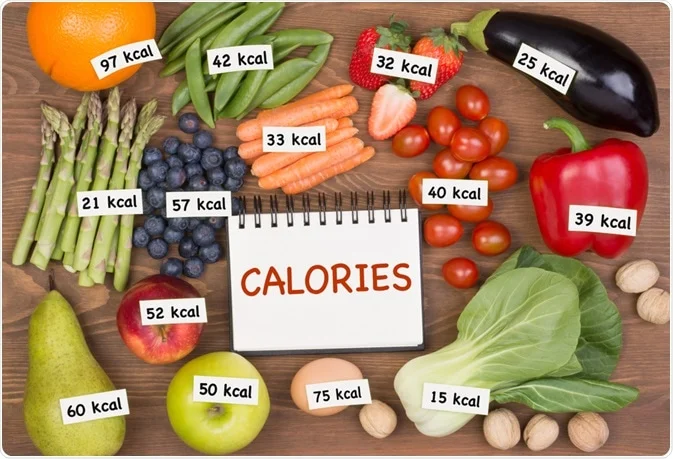
Most of the WeGLOW women who message us about food aren't struggling with willpower. They're struggling with a number they've never actually worked out: their real calorie intake. The NHS puts the average at around 2,000 calories a day for women and 2,500 for men, though that figure is only a starting point. The real number of calories your body needs depends on your age, your activity level and your body, not a generic chart.
This guide walks through how to use a calorie calculator to estimate that number, what a calorie actually is, and how to turn the answer into food you'll actually want to eat.
What a calorie actually is
A calorie is a unit of energy, not a moral judgement. It measures the amount of energy your body gets from food and drink, and how much of it your body uses to keep you breathing, moving and thinking. Every calorie you eat gets used somewhere: repairing muscle after a Pilates class, keeping your heart beating overnight, or powering a sprint interval.
Not all calories carry the same energy density. Fat has 9 calories per gram, more than double the 4 calories per gram in protein and carbohydrate, which is one reason a small amount of oil or cheese can carry more calories than you'd expect from typical portion sizes. Your body doesn't treat a calorie from vegetables identically to a calorie from biscuits in every respect, but for working out energy balance, calories without added context are still the most useful single number you have.
What determines your daily number
The NHS Eatwell Guide puts average daily calorie needs at 2,000 for women and 2,500 for men, and most UK adults take in more energy than that. It's a population average, not a personal one. The average male should eat noticeably more than the average woman, mostly down to typical body size and muscle mass, not because his needs matter more. Your own number sits on a spectrum based on age, activity level, height and weight, and overall health.
Age plays a role because calorie needs tend to fall gradually as we get older, partly through natural changes in muscle mass. Activity matters too: someone doing regular strength sessions and walking most days needs more fuel than someone who is mostly sedentary, and physical activities of any kind, not just structured training, all add to what you burn. There are many other factors at play as well, including sleep, stress, hormonal changes across your cycle, and even the weather, though these tend to shift your number by a smaller amount than age or activity level do. Some people can put on weight eating what looks like a modest amount, while others maintain their weight on what looks like a lot: individual metabolism, muscle mass and hormones all play a part, which is exactly why "just eat less" advice frustrates so many women.
This isn't a uniquely British approach either. The Dietary Guidelines for Americans, now in its 2025 to 2030 edition, works on a similar principle of a range of calorie levels rather than one fixed number, adjusted for age and sex. Once you account for age, activity level and body composition, that's how many calories you should eat, not a number pulled from a generic chart.
Finding your number with a calculator
The most reliable starting point is a reputable tool that asks for your age, sex, height, present weight and how active you are, then estimates the calories your body uses across a normal day. This figure is usually shown as your daily calorie intake, a single headline number in calories per day, but treat it as a helpful estimate rather than a strict target accurate to the last calorie. A calculator can help determine how many calories you personally need, but the number will shift as your weight, activity and age change, so it's worth revisiting every few months rather than treating it as fixed forever.
From there, track your weight over a few weeks. If you're eating roughly what the tool suggests you need daily to maintain your current weight, and your weight holds steady, that's a good sign the number works for you. None of this is about chasing a number for its own sake. It's simply easier to maintain your weight, gain weight on purpose, or lose it steadily once you know roughly where you're starting from.
If you're not sure whether your current number puts you at a healthy weight in the first place, the NHS BMI calculator is a quick way to check, using your height and body weight. It isn't a perfect measure and doesn't account for muscle mass, so someone with a lot of muscle might show a higher BMI while still being lean and fit. It's a starting point, not a verdict on your worth.
How many calories should I eat?
This is the question most WeGLOW members actually want answered, and the answer is: it depends what you're using the number for. If your goal is to hold your weight steady while training three or four times a week, you likely need more than the standard reference figure suggests. If you're newer to structured exercise or have a smaller frame, you may need less. Knowing you need more calories than you assumed is often the more useful discovery, since undereating relative to your training load is a quiet, common cause of low energy, poor recovery and stalled progress.
One WeGLOW member, an OB-GYN resident, told us she'd spent years advising patients to look after themselves while quietly neglecting her own health, including not eating enough to keep up with the hours she worked. Working out what she actually needed for a busy, physically demanding role, rather than guessing, showed her she'd been undereating for months, not overeating. That's a more common story than the diet industry tends to admit.
If you've been stuck at the same weight and energy level for months despite training consistently, it's worth asking whether you actually know how many calories you need, rather than assuming the number is fixed forever. Not everyone needs to track anything to answer that, but it's a useful step for a week or two.
Tracking your intake without losing the plot
Doing this for a week or two can be useful, without needing to become a permanent habit. Some women underestimate how many calories they consume, particularly from cooking oil, sauces and drinks, so a simple record of everything you eat and drink over a normal week often reveals more than a single day ever could. How much you eat on average across a week matters more than any single day, which is another reason a one-off tracked day can be misleading.
A running calorie count doesn't need to be perfect to be useful. WeGLOW's recipe library shows the calorie and macro breakdown for every dish, so you can see the amount of calories you eat in a meal, along with your protein intake and other macros, before you cook it, rather than estimating and hoping. That single habit, applied to foods and drinks at home and foods and beverages when you're out, tends to close most of the gap between what people think they eat and what they actually eat.
There's no single right way to spread what you eat in a day. Some women do better with three meals, others with five smaller ones, and WeGLOW's Weekly Planner is built to fit around whichever pattern you actually stick to, not a rulebook.
If you want to reduce your calorie intake
If your goal is fat loss, the guidance is to aim for a reduction of around 600 calories daily below your maintenance number, which creates a steady calorie deficit without leaving you constantly hungry or exhausted. Practically, that means learning to eat fewer calories than you burn, and often means choosing to eat and drink fewer calories across the day in smaller ways rather than one dramatic cut. There's more than one way to reduce calorie intake without feeling deprived: swapping cooking methods, upping protein and fibre, or simply drinking more water before meals all help.
Eat consistently more calories than your body burns and your body stores the extra energy as fat for later use. Eat consistently less and it draws on those reserves instead. The same logic works in reverse if your goal is to gain weight: you simply need to eat and drink more calories than you burn, consistently, for weeks rather than days. Either way, the calories you eat and drink are the only side of the equation you can directly control day to day. How much your body burns will always have some natural variation, and an estimate of the energy your body burns each day is just that: an estimate, not a fixed law.
This is also where limits matter. Eating 1,200 calories or less a day is rarely appropriate for an active adult woman and isn't something to aim for without medical guidance. If you have a history of an eating disorder, or think you might, counting calories at all may do more harm than good. Long-term severe restriction has effects on the body well beyond the scale, including disrupted sleep, low mood and, for many women, changes to their menstrual cycle. None of this needs to be extreme. Official guidance frames a modest, steady reduction as a sustainable way to lose weight, and that's borne out by what actually lasts: crash diets tend to be undone within a year, while women who learn to eat to lose weight gradually are more likely to keep the results.
A balanced diet matters more than the number
A single calorie number is a useful tool, not the whole picture. The Eatwell Guide still frames the bigger goal as a balanced diet: roughly a third fruit and vegetables, a third starchy carbohydrates, and the rest split between protein, dairy and a small amount of fat. Chasing a calorie target while ignoring where those calories come from tends to leave you tired, short on fibre and micronutrients, and more likely to feel deprived even at the "right" number.
One member described moving to a new city and pouring all her time into work and a new relationship, with little left over for herself. Joining a WeGLOW challenge, she said the only things she had to gain were strength, confidence and a healthier life. That's the reframe worth borrowing: the number on the screen is a tool for getting there, not the destination itself.
Treat your number as a floor for how your body should feel, not a ceiling to enforce out of guilt. Track it for a while if that helps, adjust it as life changes, and let it sit in the background the rest of the time. That's a healthier relationship with food than most tracking tools will teach you on their own.
Things to remember
- Official guidance points to around 2,000 calories for women and 2,500 for men daily, as population averages rather than personal targets
- Your own number depends on age, how active you are, your body, and general wellbeing, not a single chart
- A trusted online tool and a straightforward BMI check are useful starting points, not final verdicts
- Fat is more energy-dense than protein or carbohydrate, gram for gram, which is why small amounts of oil or cheese add up fast
- A steady reduction of around 600 calories daily is the guidance for sustainable weight loss, not a dramatic cut
- Very low daily targets, or tracking food obsessively if you have a history of disordered eating, need medical guidance first, not a generic guide
- What you eat matters as much as how much, and WeGLOW's recipe macro breakdowns make that easier to see without obsessing over one number

AuthorStef Williams
FAQ's
How accurate are the calorie and nutrition tracking features?
They can be helpful for awareness, but accuracy depends on how precisely you log your meals in the WEGLOW app.
How do I set calories for muscle gain or fat loss when I plan my week?
Pair training with a simple calorie target: for muscle gain, add a small surplus (about +125 to +500 kcal/day depending on the weekly rate you want) and keep protein around 1.6–2.2g/kg. For fat loss, create a modest deficit (about −250 to −1,000 kcal/day depending on the weekly rate you want) while prioritising lean protein, veggies and whole-grains. Then plan ahead—batch cook, build a varied menu, and keep flexible so life can still happen.
How much protein do I actually need—and easy ways to hit it?
As a baseline, aim for ~0.75g per kg of bodyweight per day (e.g., ~50g for 65kg). If you’re training hard/heavy, 1.4–2.0g/kg can be appropriate. Build 15–30g into each meal (eggs, Greek yoghurt, tofu/tempeh, fish, lean meats, beans) and use protein-rich snacks to top up. If you’re still short, consider whey (or brown-rice protein if plant-based)—both are rich in leucine to support muscle protein synthesis.
What is the best fitness app for women?
The best fitness app for women is one built specifically around female physiology, goals, and training needs rather than a scaled-down version of a generic app. WEGLOW is designed for women at every stage, combining structured strength training, guided workouts led by expert female trainers, and programmes that adapt to your level - whether you're starting out or training around hormonal cycles, pregnancy, or menopause. Unlike one-size-fits-all apps, it focuses on sustainable progress and training that actually fits a woman's life.


Related
Workouts
Workouts and fitness routines with our trainers to improve your health


50% discount on annual
Claim 50% off your yearly WEGLOW subscription
Unlock access to WEGLOW for 50% off when you buy an annual plan, very limited offer so hurry
get the dealLimited time offer · Terms apply