
The Best Exercises for PCOS
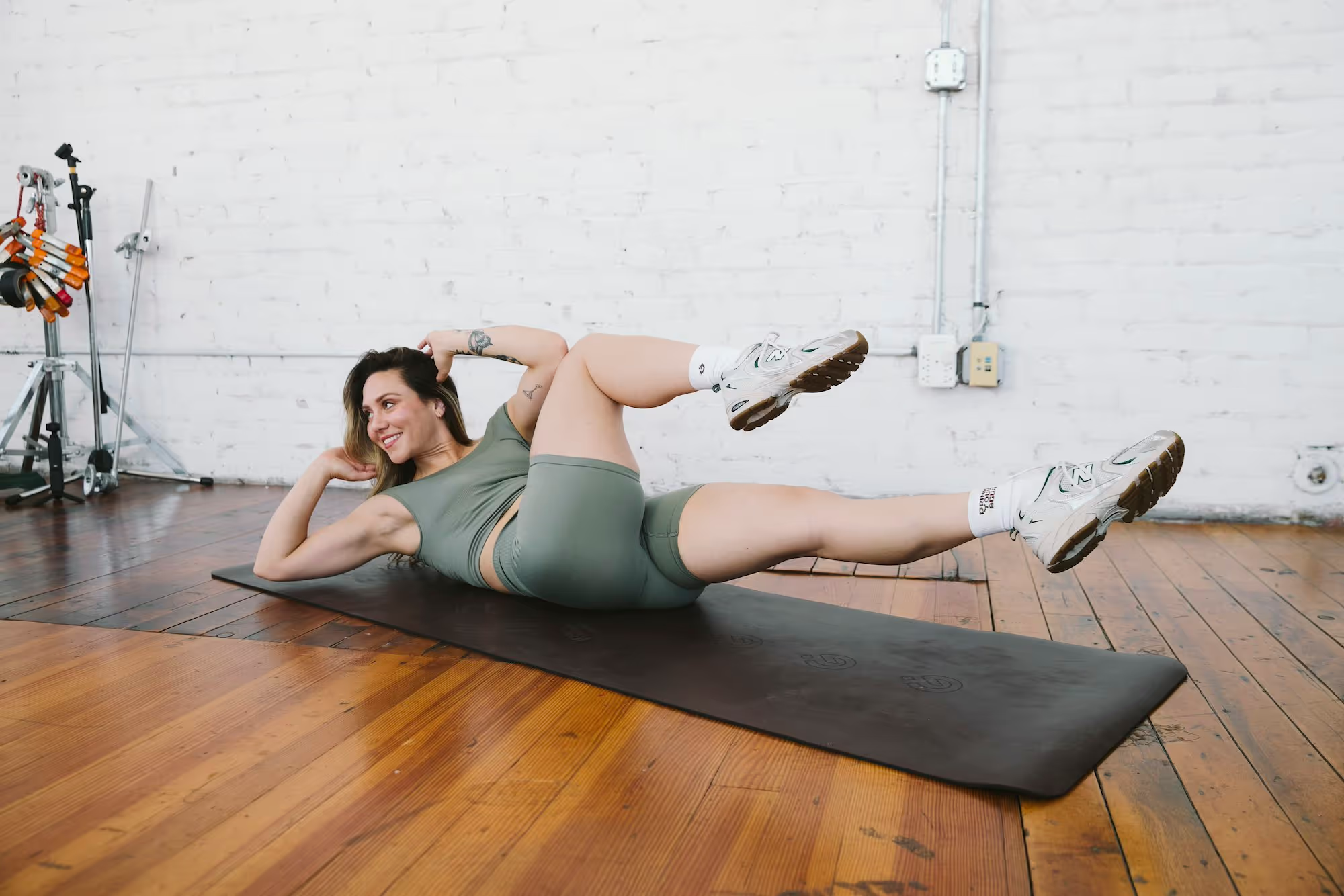
Unlock More Content In Our App For Free
Join thousands of women transforming their fitness journey with personalised workouts, expert trainers, and a community that lifts you up.
Start free trial
Workout Guide to Managing Polycystic Ovary Syndrome
None of the main types of exercise has been proven to work better than another for polycystic ovary syndrome, and that should take some pressure off. The 2023 international PCOS guideline sets a weekly volume target rather than a specific class or method, which means your best option is a mix of strength training and cardio you can sustain for months, not weeks. Regular exercise can improve insulin sensitivity and support weight management at any size, and the gains build with consistency far more than with intensity alone.
Why exercise matters for PCOS and insulin resistance
PCOS affects an estimated 10 to 13% of women of reproductive age, according to the World Health Organization, and up to 70% of those affected don't know they have it. It's usually framed as a fertility issue, but it's a long-term metabolic condition too. Women with PCOS are more likely to develop type 2 diabetes, high blood pressure and weight gain around the middle than women without it.
Insulin resistance sits at the centre of this. When your cells respond poorly to insulin, your body produces more of it to compensate, and higher insulin levels can push the ovaries to produce more androgens. It isn't only about size, either. A 2013 clamp study in Human Reproduction found insulin resistance in 75% of lean women with PCOS and 95% of those carrying excess weight. The sample was small, 40 women with PCOS in total, but the pattern matters: movement is relevant whatever the scales say.
Muscles that are working pull glucose out of the blood with less help from insulin, which is the main reason exercise can help here. Insulin resistance and weight gain also tend to reinforce each other, which is one reason obesity and polycystic ovary syndrome so often appear together. For women with a higher body weight, the NHS notes that losing just 5% can lead to a significant improvement in PCOS symptoms. That's useful context, not the whole story. The WHO is clear that healthy eating and physical activity matter for everyone with PCOS, even when they don't lead to weight loss.
What the research says about exercise types
A 2023 systematic review commissioned to inform the international guideline tried to rank exercise modalities head to head. It found only five eligible trials, covering 216 people, and no statistically significant differences between HIIT and moderate continuous training, with the certainty of evidence graded low or very low. The guideline itself landed in the same place. A Nordic summary of the 2023 recommendations puts it plainly: healthy lifestyle sits at the centre of care, with no specific diet or exercise method recommended.
Intensity may still matter. A 2020 meta-analysis of exercise interventions, pooling data from 777 women, found that improvements depended more on intensity than on total dose, with vigorous effort linked to the largest gains in fitness, waist circumference and insulin resistance. Here's the caveat: a 2021 follow-up from the same research group found that neither HIIT nor steady moderate training, used on its own, significantly improved a standard marker of insulin resistance. Exercise does a lot, but it rarely does everything without changes to your diet alongside it.
The benefits of exercise for PCOS are well supported, even if the ranking between methods isn't. We believe that good PCOS exercise is regular movement at a challenging but sustainable effort, far more than any named programme. Individuals with PCOS also vary widely, so a method that suits one person may not suit the next, and anyone selling a single approach as the cure is going beyond the data.
How much exercise with PCOS is enough?
A 2024 position statement from Exercise and Sports Science Australia, built on the international guideline, recommends 150 to 300 minutes a week of moderate activity or 75 to 150 minutes of vigorous activity, plus muscle-strengthening work on two non-consecutive days. For modest weight loss, the target rises to at least 250 minutes of moderate or 150 minutes of vigorous activity a week. Those figures mirror the general physical activity guidelines for all adults, so this isn't a special regime.
150 minutes of exercise a week sounds like a lot until you divide it: 30 minutes on five days. Moderate effort means you can talk but not sing. Vigorous means you can only manage a few words at a time, and each vigorous minute counts roughly double.
You can mix and match. A 20-minute interval session, two brisk walks and a cycle ride all count towards the same weekly total.
Strength training and why muscle matters
Skeletal muscle is where most insulin-driven glucose uptake happens, so the more of it you have and use, the more glucose you can clear. That's why resistance training belongs in every PCOS plan, not as an optional extra. Two sessions a week covering legs, glutes, back, chest and core is the baseline, and you'll build muscle faster than you might expect once the load increases steadily.
You don't need a gym to start a strength workout. Bodyweight exercises such as squats, split squats, glute bridges, incline push-ups against a sofa and planks are a proper resistance exercise session when you do enough sets and slow down the reps. Once they feel easy, add dumbbells or bands. Form matters more than load early on: one WeGLOW member who had trained on and off for ten years told us she'd never been so consistent with a programme, and credited the directional videos with keeping her technique right.
Progress is easier to see when you write it down. Logging personal bests with WeGLOW turns a vague sense of "getting fitter" into numbers you can check, which helps on the weeks when the scales don't move.
Cardio and HIIT: where intensity fits
Cardio covers anything that raises your heart rate for a sustained period: brisk walking, cycling, swimming, rowing, dance classes. Steady aerobic exercise is the easiest place to build volume because you can do it most days without much recovery cost, and walking in particular takes no equipment or skill.
High-intensity interval training packs more effort into less time. A single trial in the 2023 review found HIIT improved menstrual regularity more than moderate-intensity training in women with PCOS, although that result rests on very low certainty evidence. If you're short on time, one 20-minute HIIT workout can replace a longer steady session. If you're new to training, give yourself a few weeks of regular cardio exercise first so your joints and fitness can keep up.
Is there a worst exercise for PCOS?
You'll see claims online that HIIT spikes cortisol and makes PCOS worse, or that running is off-limits. The trials comparing different activities don't support a list of banned ones. Realistically, the worst choice is the one that injures you, exhausts you or makes you so miserable you stop altogether.
Intense exercise every day with no recovery is the more realistic problem. Sleep issues and PCOS fatigue are common complaints, and hammering through hard sessions on poor sleep tends to end in burnout rather than results. Swap one interval day for a walk, yoga or Pilates when your energy is low. Managing PCOS symptoms well includes knowing when to ease off.
It's also worth watching your relationship with training. WHO notes that women with polycystic ovary syndrome may experience eating disorders alongside anxiety and depression, so if exercise starts to feel like punishment for food, speak to your GP.
A weekly PCOS workout plan you can adapt
This plan hits roughly 155 moderate-equivalent minutes of cardio plus two strength days, which meets the minimum guideline target. Start the week with 40 minutes of full-body strength on Monday, then a 40-minute brisk walk or bike ride on Tuesday. Wednesday is a 30-minute interval session with some mobility work at the end, and Thursday repeats Monday's 40-minute strength session. Friday is 30 minutes of Pilates or yoga, and Saturday is a longer steady cardio session of around 45 minutes. Sunday is for rest, or an easy 30-minute walk.
Treat it as a template for a PCOS-friendly workout week rather than a fixed prescription. If your schedule only allows three days, prioritise the two strength sessions and one longer cardio day, then add walking where you can. Shorter sessions are a reasonable starting point too. Another member, recovering from knee surgery, chose an intermediate home guide so she wouldn't overdo it, and said the workouts suited her because they weren't too long to fit in.
Many cycle-based training plans assume a predictable cycle, and with PCOS yours may not be. If your periods are irregular, use energy and recovery as your guide rather than a calendar date, and keep the weekly totals steady.
Making your exercise routine stick
The structured exercise trials showing benefit typically ran for 12 weeks or more, so judge your exercise programme over months, not a fortnight. Consistency is where most plans fall apart. Scheduling sessions into a weekly planner with reminders, and filtering for a workout that matches the time and equipment you actually have that day, removes a lot of daily decision-making. WeGLOW's filters cover everything from five-minute sessions to an hour, gym or no equipment, low-impact or challenging.
Diet and exercise work best together. There's no single PCOS diet with proven superiority, so the most effective exercise training sits alongside an eating plan built on fibre, protein and minimally processed foods that you can keep up. If you want structure, a diet plan built around your calorie and protein targets helps you manage weight without guesswork, and WeGLOW's 700+ recipes come with full macro breakdowns. If you're working towards a healthy body weight, aim to maintain a healthy weight through habits you'd happily keep, not short bursts of restriction.
Finally, bring your GP into it, especially soon after a PCOS diagnosis, when WHO recommends blood tests for insulin resistance and cardiovascular risk. The international guideline treats the management of polycystic ovary syndrome as shared work between you and your clinicians. Good PCOS management means a joint management plan covering medication, nutrition and physical exercise for your overall health and metabolic health over the long term. Managing PCOS is a long game, and the habits that last are the ones that work.
Things to remember
- No exercise type has been shown to beat another for PCOS, so choose what you'll repeat
- Aim for 150 to 300 moderate or 75 to 150 vigorous minutes a week, plus two strength days
- Insulin resistance affects many lean women with the condition, so movement matters at every size
- Vigorous effort may bring bigger gains, but build up gradually if you're new to it
- Exercise alone may not shift insulin resistance, so pair it with sustainable eating habits
- Ignore lists of banned workouts, and watch for burnout instead
- Track progress with personal bests, not just the scales
AuthorAnna Hage
FAQ's
What is the best fitness app for women?
The best fitness app for women is one built specifically around female physiology, goals, and training needs rather than a scaled-down version of a generic app. WEGLOW is designed for women at every stage, combining structured strength training, guided workouts led by expert female trainers, and programmes that adapt to your level - whether you're starting out or training around hormonal cycles, pregnancy, or menopause. Unlike one-size-fits-all apps, it focuses on sustainable progress and training that actually fits a woman's life.
What workouts should I do during my period?
We recommend keeping it kind: think lower-intensity or lower-impact movement like Pilates, yoga, walking or light cardio. If you’re strength training, go lighter with slightly higher reps, focus on breathwork, hydrate well and listen to how you feel—rest is ok. Some women also find magnesium, zinc and omega-3 helpful for symptoms; always check what’s right for you and track how you respond across your cycle.
Why is WEGLOW the best women’s workout app for beginners?
It provides free and paid, high-quality workout videos led by popular trainers, covering cardio, Pilates, HIIT, and more. The app also includes guided schedules and motivational tracking—perfect for women who are new to fitness and want to build consistency.
Do 15–20 minute workouts really make a difference?
Yes—consistency beats marathon sessions. Our community loves short formats like Beginner’s Sweat in 20 (HIIT/Cardio), Bands of Glory (Barre), Lower Body Blitz (Strength), Whole Body Feels (Yoga), Dumbbell-Only Full Body (Strength & Conditioning) and Intense Booty Blast (Pilates). Use them as stand-alones on busy days or as add-ons to your guide.
Do I need long resistance bands or other equipment to use WEGLOW?
Many of our classes are bodyweight, but some do require light dumbbells, booty (short) bands, long resistance bands, or sliders to intensify sessions. Head to the WEGLOW shop for “Burn Bands” and long “Build Bands” to participate in workouts that require additional items


Related
Workouts
Workouts and fitness routines with our trainers to improve your health


50% discount on annual
Claim 50% off your yearly WEGLOW subscription
Unlock access to WEGLOW for 50% off when you buy an annual plan, very limited offer so hurry
get the dealLimited time offer · Terms apply