
Postpartum Ab Workout
Unlock More Content In Our App For Free
Join thousands of women transforming their fitness journey with personalised workouts, expert trainers, and a community that lifts you up.
Start free trial
A Postpartum Ab Workout That Rebuilds Your Abdomen And Core After Giving Birth
A safe postpartum ab workout helps you reconnect your breath, pelvic floor, and deep core before you think about harder ab work. That matters after giving birth because the abdominal wall, rib cage, pelvis, and posture all change through pregnancy, and many women also notice weakness or a gap called diastasis recti. The goal is not to rush back to crunches, it is to rebuild core function so your postpartum body feels supported during feeding, lifting, walking, and getting back into exercise.
- Gentle postpartum core exercises usually come first, because the best postpartum plan starts with breath, alignment, and control rather than high-pressure moves.
- Diastasis recti is common after pregnancy, and regular pelvic floor and deep stomach work can help reduce abdominal separation and improve posture.
- The right exercises can help strengthen your core, reduce the risk of back pain, and support daily movement without overloading healing tissue.
- WeGLOW supports that process with flexible training, education, and a broad library of workouts that help women stay consistent through every stage of life.
Postpartum Core Changes Need A Different Starting Point
Your postpartum core is not just “out of shape”. Pregnancy creates core changes during pregnancy, with the abdominal muscles and connective tissue adapting to make space for your baby. The rectus abdominis, the front “six-pack” muscle, can separate along the linea alba, which is the midline tissue that joins the left and right sides of the abdomen. That separation of the abdominal muscles is called diastasis recti, and it can leave the abdominal wall feeling softer, weaker, or less responsive than before.
Many women notice a bulge near the belly button, poor posture, a weakened core, or lower back discomfort when lifting, rolling out of bed, or carrying the baby. That does not mean your abdomen is “broken”, but it does mean your postpartum ab and deep abdominal system need a different plan. A weak core can also increase the risk of back strain, especially when daily tasks pile up and sleep is low.
Timing matters too. NHS guidance says gentle exercises after giving birth, such as walking plus pelvic floor and tummy work, can often start as soon as you feel able after a straightforward birth. High-impact training usually waits until after the postnatal check, and recovery can take longer after a c-section or a more complicated delivery. A woman at two weeks postpartum needs a different workout routine from someone months further into post-pregnancy recovery.
The Best Postpartum Ab Workout Starts With Breath And Deep Core Control
The best diastasis recti exercises and the safest core exercise after birth usually begin with breathing. Your pelvic floor and the abdominal wall work together, so we want the core and pelvic floor to switch on as a team. That is why a smart postpartum ab workout starts with an exhale, a gentle lift through the pelvic floor, and a feeling of the deep core drawing in without gripping. This kind of core strengthening is often far more useful than jumping into crunches or planks too early.
A good starting position is easy on the body: lay on your back, or rest lying flat on your back with each knee bent and your feet flat, then let the rib cage settle over the pelvis. As you exhale, gently draw in the lower tummy, think of narrowing the waistline, and add a light pelvic floor lift. That cue helps engage your core without driving up abdominal pressure. If you place your fingers around the belly button to feel what happens, you want the wall to stay quiet rather than dome.
That same activation can later be practised sitting or standing, which is helpful because real life with a baby rarely happens flat on your back. Safe exercises are the ones that let you breathe, talk, and stay in control, not the ones that leave your ab muscles pushing forward. Our aim is to strengthen the deep core muscles, support posture, and rebuild core control you can use while feeding, carrying, or moving through your day.
A Simple Post-Pregnancy Workout Routine Builds Strength Without Excess Pressure
Breathing Braces And Pelvic Tilts Build Your Foundation
We like to start postpartum workouts with breathing braces, pelvic floor exercises, and pelvic tilts. Breathe in softly, then exhale as you draw the lower abdominal area in and flatten the small of the back very gently. Those deep core exercises are simple, but they are targeted exercises that teach the transverse abdominal muscles and other deep core muscles to switch on again. For many postpartum women, this is the point where core strength starts to come back.
Heel Slides And Knee Rolls Add Control Without Rushing
Once that first stage feels steady, heel slides and knee rolls are a great next step. ACOG’s postpartum exercise guidance includes sliding one foot away while keeping the abdominal muscles engaged, and UCLH also shares knee rolls with the lower tummy switched on. Those moves are better early ab exercises than fast ab work because they train control through the trunk, support the pelvis, and help reduce unnecessary strain through the lower back.
Tabletop Holds And Bridges Create Everyday Strength
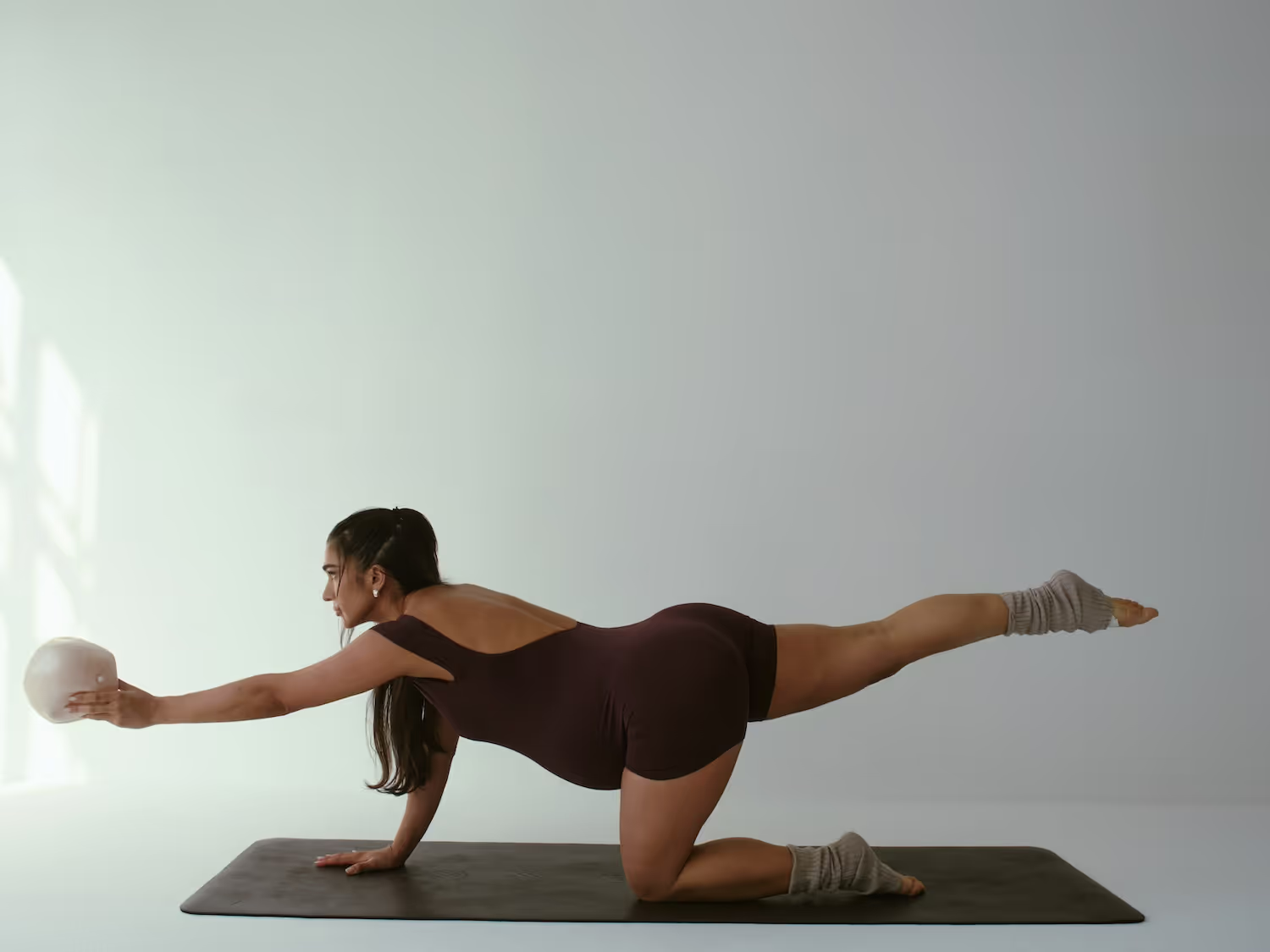
Later, you can add bridges, controlled marching, and light work from a tabletop position. A second tabletop position variation on hands and knees can help you practise core stability while reaching one leg back or holding steady through the torso. Core exercises postpartum should feel slow and clean. If the abdomen bulges, pressure drops into the pelvic floor, or your breathing changes, step back. It’s best to progress only when you can exhale, hold alignment, and keep the deep core active.
Progressing Safely After Giving Birth Protects Your Pelvic Floor
A strong core after birth is not only about the front of the stomach. Real postpartum recovery asks the pelvic floor and the abdominal system to work together so you can stand taller, lift better, and move with more confidence. The right exercises support core work without forcing it. That means no breath-holding, no aggressive bracing, and no chasing fatigue for the sake of a harder workout.
Cleveland Clinic advises avoiding movements that push the abdominal wall outward, such as crunches and sit-ups, during the first six weeks postpartum if you have diastasis recti. That same guidance recommends rolling onto your side to get out of bed and avoiding loads heavier than your baby early on. Those details matter because exercises for diastasis recti should help close the gap over time, not make abdominal separation or ab separation worse.
Please get support from a physical therapist if you have pain, leaking, pelvic heaviness, obvious doming, or a gap that still feels significant at around eight weeks. NHS guidance also suggests speaking to a GP if the gap is still obvious after that stage, especially if back pain or abdominal discomfort is present. Severe diastasis recti, symptoms after a vaginal birth, or a slower c-section recovery all deserve individual care. A physical therapist can assess your core and pelvic floor, guide postpartum exercise progression, and help you find the safest path back into exercise.
Social Proof Shows Why Women Stay Consistent With WeGLOW
One pattern we see again and again in customer interviews is that variety helps women stay consistent. Our members regularly mention that having a wide choice of training styles makes it easier to keep showing up, especially when energy, time, and routine shift from week to week. That matters on a postpartum journey, because some days call for core moves and mobility, while others call for a short class that feels manageable. WeGLOW now includes more than 2,500 workouts, 400+ on-demand live classes, and filters that help women find what suits their schedule in just a few taps.
A second proof point comes from how we build the platform around feedback. We release new workouts and updates every week, and our features include reminders, planning tools, progress tracking, personal best logging, challenges, recipes, and a learn section packed with women’s health, fitness, and nutrition content. That mix is valuable for pregnancy and postpartum because consistency rarely comes from one perfect session. It comes from education, flexibility, and support you can actually use in real life.
Our wider approach also fits this stage well. We are built for women with busy lives, including mums who want realistic guidance, a supportive community, and a plan that does not demand perfection. That is why we focus on helping women rebuild core function, improve confidence, and create sustainable habits rather than chasing a quick fix. For us, the best postpartum support is personal, flexible, and grounded in education.
A Postpartum Ab Workout Works Best When You Respect Recovery
A smart postpartum ab workout is less about chasing a flatter stomach and more about helping your body feel capable again. When you strengthen your core with breath-led, controlled movements, you support the abdominal muscles, protect the pelvic floor, and make daily movement feel easier. That is how you rebuild core function after the huge changes of pregnancy and postpartum, and that is what creates a more strong core for the long term.
Listen to your body, start with safe exercises, and use progressive core workouts rather than forcing hard ab work before your body is ready. A postpartum ab workout should support your postpartum recovery, not fight it. Whether you are doing gentle postpartum core exercises at home, working with a physical therapist, or using WeGLOW to find expert-led core work that fits your week, the goal stays the same: feel supported, feel informed, and move forward with confidence.
Always consult your GP or midwife before starting a new exercise program during pregnancy.
AuthorAnna Hage
FAQ's
Is WeGLOW a good fitness app for women and what makes it different?
WeGLOW offers varied training styles (Strength, Pilates, cardio, yoga, barre, meditation and more), weekly new content, and built-in tracking (PBs, badges, stats, progress photos). Most importantly, 98% of women that use our fitness app and stick to their plan see results in 8 weeks1
What workouts should I do during my period?
We recommend keeping it kind: think lower-intensity or lower-impact movement like Pilates, yoga, walking or light cardio. If you’re strength training, go lighter with slightly higher reps, focus on breathwork, hydrate well and listen to how you feel—rest is ok. Some women also find magnesium, zinc and omega-3 helpful for symptoms; always check what’s right for you and track how you respond across your cycle.
Is WeGLOW the best women’s fitness app for personalized workout plans?
Yes, we think so, It offers goal-based programs, from strength training and yoga to pre or post-pregnancy fitness. The app tailors workouts to your fitness level, tracks progress, and includes nutrition guidance, making it a top choice for women seeking a complete fitness solution.
Can I keep going to the gym while I'm pregnant?
For most people with a healthy, low-risk pregnancy, continuing to train at the gym is not only safe but actively encouraged, current guidance from bodies like the NHS and the Royal College of Obstetricians and Gynaecologists supports staying active throughout pregnancy. That said, "carrying on as normal" isn't quite the right approach. Your workouts will need to evolve: heavy lifting, high-impact movements, exercises lying flat on your back beyond the first trimester, and anything with a risk of falling or abdominal impact should be modified or swapped out. Many people find that lighter weights with higher reps, machine-based work, and a stronger focus on glutes, back, and pelvic floor serve them much better as pregnancy progresses than chasing PRs. If you're new to the gym or returning after a break, pregnancy isn't usually the time to start an intense new programme but gentle, guided strength and mobility work is generally a good idea. Always check with your midwife or GP before starting or continuing a gym routine, particularly if you have any pregnancy complications, and listen to your body over any plan on paper.
What should a good pregnancy workout plan include?
A safe and effective pregnancy workout plan should be built around your changing body, not a pre-pregnancy routine scaled down. Most prenatal fitness guidance recommends a balanced mix of low-impact cardiovascular activity (like walking, swimming, or stationary cycling), strength work that supports your posture and prepares you for labour, and pelvic floor and core training adapted for pregnancy. The plan should adjust as you move through each trimester, exercises that feel great in the first trimester may need modifying or replacing later on, particularly anything performed flat on your back or involving deep abdominal engagement. Crucially, a good plan is also one that's been cleared by your midwife, GP, or obstetrician, especially if you have any complications or a high-risk pregnancy. WeGLOW's pregnancy workouts are designed by Stef and reviewed by qualified prenatal specialists and structured to evolve with you week by week, so you're never guessing whether a movement is still appropriate.
How often should I exercise during pregnancy?
Current guidelines suggest aiming for around 150 minutes of moderate-intensity activity per week during pregnancy, broadly the same recommendation as for non-pregnant adults spread across most days of the week. "Moderate intensity" means you can still hold a conversation while moving; if you're too breathless to talk, it's a sign to ease off. This can include a mix of walking, swimming, prenatal strength sessions, yoga, or pilates, and you don't need to do it all in one go, three 10-minute walks count just as much as a single 30-minute session. Consistency matters more than intensity here. Shorter, regular sessions tend to feel more sustainable than ambitious workouts you can only manage occasionally, and they help with energy levels, sleep, mood, and recovery after birth. Some days you'll feel up for a full session; other days a gentle walk is plenty. As always, your healthcare provider is the best person to confirm what frequency and intensity is right for your specific pregnancy. Giving birth is a massive workout for your body so making sure its fit and healthy is really important.


Related
Workouts
Workouts and fitness routines with our trainers to improve your health


50% discount on annual
Claim 50% off your yearly WeGLOW subscription
Unlock access to WeGLOW for 50% off when you buy an annual plan, very limited offer so hurry
get the dealLimited time offer · Terms apply