
Upper Body Workout For Women

Unlock More Content In Our App For Free
Join thousands of women transforming their fitness journey with personalised workouts, expert trainers, and a community that lifts you up.
Start free trial
Upper Body Workout Women Can Do With Dumbbells For Toned Arms
An upper body workout women can rely on does two jobs at once: it builds shape through the shoulders and upper arms, and it makes day-to-day movement feel easier, from carrying bags to sitting tall at a desk. We recommend a simple approach: pick a few upper-body patterns (push, pull, press, curl), choose a weight you can control for 12 reps, and repeat the workout with small progressions across a few weeks. Consistency matters more than perfection, and two focused strength training sessions can be enough to start seeing changes when you stick with them.
Summary:
- Train the upper body 2 or more times per week with recovery between sessions.
- Use a dumbbell plan that hits push, pull, and arm work for a balanced muscle group split.
- Prioritise proper form so your shoulders, elbow, and lower back feel good while you increase weight.
- Add banded and body weight options when you train at home or want lighter days.
- Use WeGLOW to keep your training varied, track progress, and match sessions to your cycle and schedule.
Upper Body Training Supports Confidence, Posture, And Daily Life
Our goal with an upper body focus is simple: help you build strength where many women feel least confident, without turning training into a complicated project. A smart upper body workout gives your shoulders and arms shape, supports your joints, and balances the work you already do in everyday life. Many public health guidelines also recommend muscle-strengthening work at least twice weekly across major areas, including the chest, shoulders, arms, back, and abdomen.
A common mistake with body workouts is going too hard, too soon, then disappearing for a week because everything aches. We prefer a steady rhythm: the right workout dose, repeatable sessions, and progress you can measure. That keeps upper-body training consistent, whether you train in a gym or at home, and it makes the results feel earned rather than accidental.
Equipment Needed For Home Or Gym Sessions Stays Simple
The equipment needed for a great workout is less than most people think: a pair of two dumbbells or even one dumbbell, plus an optional resistance band. A bench is useful, but a sturdy chair or the floor works for most moves. A small workout space is enough at home, and a basic home gym setup can be as minimal as a yoga mat and a few weights.
A dumbbell plan also makes life easier when the gym is busy. You can set up with one set of kit and keep going, instead of hunting for machines. We also like bands for warm-ups and lighter sessions, since a resistance band lets you train the back and shoulders without loading heavy weight when your body feels tired.
A Repeatable Upper-Body Workout Routine Builds Upper Body Strength
This upper-body workout is built around control and balance. Choose a weight that feels challenging by the last few reps while you still keep clean technique. Aim for 12 reps on each move, rest, then repeat for 2 to 3 rounds. That structure keeps each training session efficient and helps you build upper body strength without guesswork.
Try This: Upper Body & Core Strength Workout from our Strong & Lean in 30 V2 women's fitness workout program
Trainer: Colby Landry | Equipment: Dumbbells, resistance band, mat | Level: All levels | Time: 30–35 minutes
Warm-Up (3 minutes)
- Cat-Cow — 30 seconds
- Walk Outs — 45 seconds
- Crab Reach — 30 seconds each side, 15 seconds rest
Superset 1 — 3 sets
- Bent-Over Dumbbell Row — 45 seconds (slow tempo: 2 seconds down, 1 second up)
- Dumbbell Hang Clean & Push Press — 45 seconds (dynamic tempo), 30 seconds rest
Superset 2 — 3 sets
- Standing Arnold Press — 45 seconds (slow tempo: 2 seconds down, 1 second up)
- Banded Plank Row — 25 seconds (slow tempo), 30 seconds rest
Superset 3 — 3 sets
- Tricep Press-Ups — 45 seconds (slow tempo: 2 seconds down, 1 second up)
- Dumbbell Lateral-Front Raise — 45 seconds (slow tempo), 30 seconds rest
Core Finisher — 3 rounds
- Plank Commandos — 50 seconds, 10 seconds rest
- V-Ups — 50 seconds, 10 seconds rest
- Dumbbell Squat Thruster — 50 seconds (dynamic), 10 seconds rest
This is one of over 2,500 workouts in the WEGLOW app — with full video demos, progress tracking, and workouts matched to your cycle and schedule. Start your free trial →
Biceps Curls And Triceps Work Shape Upper Arms With Control
Arm training works best when you treat it like skill, not punishment. Start with a classic biceps curl: stand tall, brace your midsection, and keep the elbow stacked under the shoulder. Avoid swinging the weight, and keep the lowering phase slow. This curl pattern targets your biceps while also teaching you to control the load.
Next, pair it with a triceps move. Your triceps are the main muscle on the back of the arm, and training them tends to make the biggest visual change for many women chasing toned arms. Keep the elbow pointing where it feels stable, use a manageable weight, and stop the set when you lose control. That combo hits the front and back of the arm, and it supports better pressing mechanics in the rest of your upper body workout for women.
One more tip we use with clients: grip matters. A neutral grip often feels kinder on the elbow, especially if you type a lot or feel tight through the forearms. That small adjustment helps you keep showing up for your next workout instead of training around aches.
Bent-Over Rows Support Back Muscles And Improve Posture
Pulling strength is the secret sauce for an effective upper body plan, especially if you sit at a desk. The bent-over row trains your upper back, challenges your back muscles, and teaches you to set your shoulder blades down and back. That is one of the simplest ways to improve posture over time, because you are practising the positions you want to own in daily life.
Rowing also helps protect the lower back when done well. Set your stance, hinge from the hips, and keep the spine long. The arms move the load, but the torso stays steady. This is where many people go wrong by going too heavy too soon. A lighter dumbbell with full control does more for your body than rushing with bigger weight.
Back work can also matter if you deal with back pain. Training does not replace medical care, but a steady programme that includes rows, controlled bracing, and smart progressions often helps women feel more supported through the trunk. Pair this with gentle core work and daily movement breaks, and you will usually notice posture improvements within a few weeks.
Chest Press And Shoulder Press Train The Whole Upper Body
Pressing patterns balance your pulling work and help you feel capable in the gym and beyond. A chest press variation trains the chest, shoulders, and triceps, and it is easy to scale with weight or range of motion. Use the floor if your shoulders feel cranky, because it naturally limits depth.
A shoulder press builds overhead strength and stability, and it is also a great way to train shoulder exercises without needing machines. Keep ribs down, exhale as you press, and avoid flaring the elbows out wide. That cue usually helps women feel the work in the shoulder rather than the neck.
We also like to pair pressing with simple ab exercises to keep the trunk engaged. A dead bug or plank variation helps you brace, which carries over to every push and pull you do. That is how your upper body work supports lower body lifts too, since stability is shared across the whole system.
Progression With Weight Builds Muscle Mass Without Burning Out
Progress is not magic, it is maths you can stick with. Start where you are, log what you used, then add a small increase in weight once your sets feel controlled. A simple rule works well: when you can complete all rounds with clean form, increase the load next time, or add a rep or two while keeping the same weight. This is how you build strength and build muscle in a way that respects recovery.
Your plan should also respect the whole muscle group balance: pushing, pulling, arms, and core support. That keeps shoulders happy and reduces the chance you overtrain one area. The goal is lifting weights you can own, not chasing numbers that force sloppy reps. A personal trainer can be useful here if you want eyes on your technique, and a certified personal trainer is also a good option when you are returning from injury or feeling unsure about form.
Progression can also be a swap rather than more load. Use two dumbbells for symmetrical moves, then switch to one dumbbell for single-arm presses and rows when you want more stability work. That approach helps you target the muscles with intention while keeping sessions interesting. Over time, that is how you grow upper-body muscle mass and see more visible muscle mass changes.
Proper Form Protects Your Joints And Keeps Your Workout Consistent
A great workout for women should feel empowering, not risky. Proper form starts with three basics: stable feet, controlled breathing, and joint alignment. Keep your wrists stacked, move through pain-free ranges, and treat every rep like practice. Your upper body will respond faster when the movement quality stays consistent.
Warm-ups matter too, especially for shoulders and elbows. A light resistance band sequence before pressing can help you feel more connected through the back of the shoulders. For curls and triceps work, start lighter than you think, then build once the movement feels smooth. That is also why we avoid rushing into heavy weights early on.
Recovery finishes the loop. Leave at least a day between sessions for the same area, and plan your upper body routine around the rest of your week. Two to three sessions times per week is plenty for most women, especially when you also train legs, do cardio, or follow full body workouts.
Social Proof And Case Studies Show What Works In Real Life
Women tell us consistency is easier when training feels flexible, not rigid. During customer interviews, variety is one of the benefits people mention most often, and we think that matters because boredom is one of the quickest ways to drop a routine. WeGLOW includes over 2,500 workouts and counting, across strength, Pilates, yoga, HIIT, mobility, and more, so you can choose what fits your day.
Long-term members also point to regular updates as a reason they keep training: we release new sessions and improvements every week, shaped by feedback, so the experience keeps getting better. That matters because common complaints with other services include glitches, rigid programming, and cancellation frustration, which can break momentum.
We back this up with tools that make progress visible: on-demand classes, guides, filters to quickly find what you need, progress tracking, and planning features that help you stay consistent. Our wider approach also recognises women’s real lives, including cycle-aware recommendations and education that helps you feel confident about what you are doing and why.
WeGLOW Helps You Keep Upper-Body Workouts Simple And Sustainable
Upper body results come from repeating the basics with patience. WeGLOW supports that with training styles you can use at home or in the gym, whether you want a focused upper body workout with a dumbbell, a band-only session, or a coach-led class that fits a busy week.
We also build habit tools around your workout life: save favourites, plan sessions in a weekly view, track personal bests, and keep your routine realistic rather than extreme. If your energy shifts across the month, our women-first approach helps you choose sessions that match how you feel, so building upper body strength stays consistent, not all-or-nothing.
Our promise is simple: we help you keep showing up, because that is what changes your body and your confidence. Choose a pair of dumbbells, start with the plan above, and keep a note of what you used. That is strengthening your upper body in a way you can actually sustain.
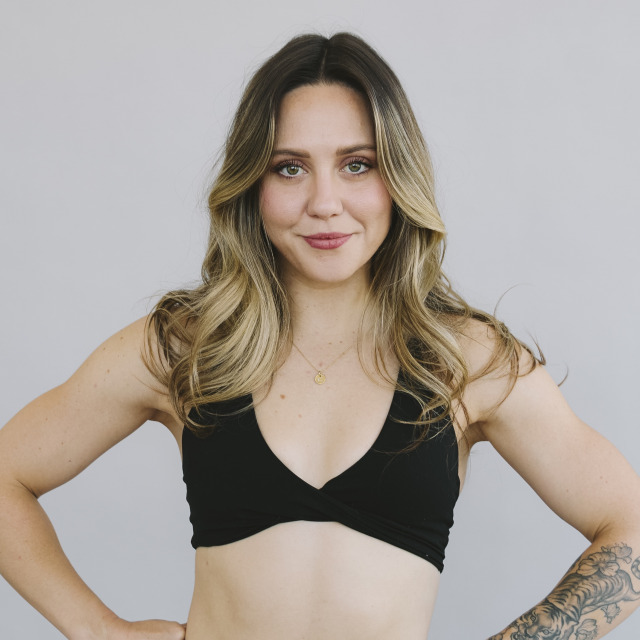
AuthorColby Landry
FAQ's
How do I set calories for muscle gain or fat loss when I plan my week?
Pair training with a simple calorie target: for muscle gain, add a small surplus (about +125 to +500 kcal/day depending on the weekly rate you want) and keep protein around 1.6–2.2g/kg. For fat loss, create a modest deficit (about −250 to −1,000 kcal/day depending on the weekly rate you want) while prioritising lean protein, veggies and whole-grains. Then plan ahead—batch cook, build a varied menu, and keep flexible so life can still happen.
What workouts should I do during my period?
We recommend keeping it kind: think lower-intensity or lower-impact movement like Pilates, yoga, walking or light cardio. If you’re strength training, go lighter with slightly higher reps, focus on breathwork, hydrate well and listen to how you feel—rest is ok. Some women also find magnesium, zinc and omega-3 helpful for symptoms; always check what’s right for you and track how you respond across your cycle.
Do I need long resistance bands or other equipment to use WEGLOW?
Many of our classes are bodyweight, but some do require light dumbbells, booty (short) bands, long resistance bands, or sliders to intensify sessions. Head to the WEGLOW shop for “Burn Bands” and long “Build Bands” to participate in workouts that require additional items
How does WEGLOW adjust my workouts based on my menstrual cycle, and how should I use it to stay consistent
WEGLOW uses your menstrual cycle phase (for example, follicular, ovulation, luteal, and menstrual) to recommend workouts that are better aligned with the physical changes and energy levels you might experience in each phase.


Related
Workouts
Workouts and fitness routines with our trainers to improve your health


50% discount on annual
Claim 50% off your yearly WEGLOW subscription
Unlock access to WEGLOW for 50% off when you buy an annual plan, very limited offer so hurry
get the dealLimited time offer · Terms apply