
Functional Exercises For Women
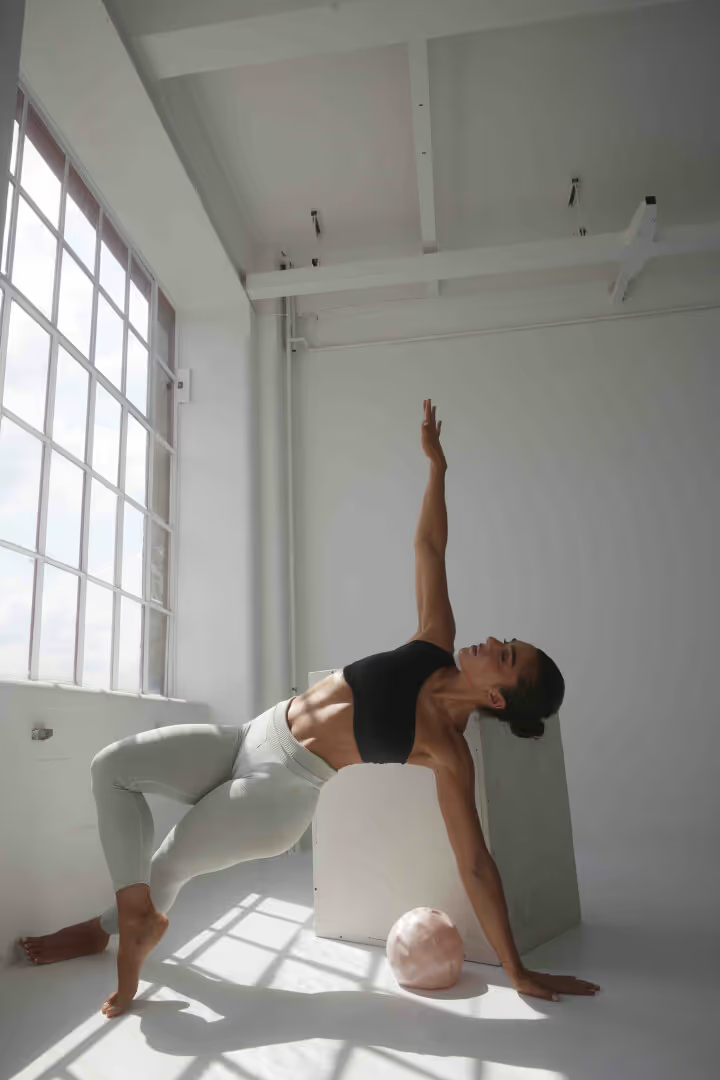
Unlock More Content In Our App For Free
Join thousands of women transforming their fitness journey with personalised workouts, expert trainers, and a community that lifts you up.
Start free trial
The Best Functional Exercises For Women: Functional Strength Training Exercises For Full Body Functional Fitness And Mobility
We build everyday-ready bodies by pairing smart exercise choices with a simple workout structure: practise the squat, lunge, and plank, add a few loaded carries and pulls, then keep mobility work short but consistent, so you can move well, feel confident, and build strength that shows up in real life. This approach blends functional strength, everyday fitness, and a little strength training, without complicated rules or punishing sessions.
- Our priorities: safe form, steady progress, and flexibility for busy weeks
- Our focus: functional movement patterns that support daily tasks
- Our promise: options for every fitness level, from bodyweight starters to heavier weight progressions
- Our aim: help you get results you can actually use, not just numbers on a screen
Exercise Principles That Make Everyday Fitness Work
Functional training is our approach to fitness that uses body exercises and loaded patterns to train the body for day to day life. Think exercises that mimic lifting shopping, getting up from the floor, or carrying a suitcase up stairs. We like it because one exercise can train multiple joints and more than one muscle group at once, which is why compound exercises sit at the centre of our programming.
Guidelines are simple: adults should do muscle strengthening activities at least twice a week, alongside aerobic activity. A simple resistance exercise with a dumbbell, band, or your own bodyweight counts. Our take is practical: two full body sessions plus a brisk walk most weeks is enough for many women to improve your overall fitness and feel more capable.
Range of motion matters, but it does not have to be a separate hour of stretching. Evidence shows resistance training can improve range of motion, even without additional stretching. We still include mobility because joints like hips and ankles often need extra attention, especially if you sit a lot.
Benefits That Come From Functional Strength, Mobility, And Consistency
The benefits of functional show up fast: walking feels lighter, stairs feel less annoying, and carrying things stops being a drama. Research also links muscle strengthening activities to a lower risk of all cause mortality and several major conditions, with modest weekly totals associated with meaningful gains. We see the day-to-day change first: body strength improves, confidence rises, and the ability to perform daily movement feels easier.
Functional vs classic gym training is not a fight, it is a spectrum. Classic lifting can be brilliant for building specific lifts, while functional training keeps the patterns closer to movement you actually use. Our favourite blend is functional and strength together: a foundational squat and hinge plus a carry or rotation that challenges balance and coordination.
Workout Technique Cues We Use For Safer Movement
Technique is where many platforms let people down, and poor form increases the risk of injuries. We keep cues short, repeatable, and easy to remember:
Keep your ribs stacked over hips, move slowly on the way down, and keep the load close. For pressing patterns, keep your elbow under the wrist. For push ups, keep elbows close to your body, and keep your shoulder blades moving smoothly, so the front of your body does not take over.
Choose loads that let you keep quality. If the last rep turns into a wobble, drop the load, shorten the set, or swap the variation.
Key Exercise Patterns For Real Life Strength
Our best exercises are the patterns you can repeat for years. We treat these as best functional fitness exercises because they scale from zero equipment to heavier weight, and they fit a gym session or home workouts. These functional moves stay simple, but they work. Many of these also count as functional training exercises, because they teach movement that carries over to life.
Our top functional flow is simple: squat, lunge, plank, carry, then a pull.
Squat Variations That Build Lower Body Capacity
The squat trains hips, knees, and ankles together, and it is one of the most useful patterns for the lower body. Start with a chair tap if you are new. Stand with your feet just outside hip width, toes slightly out. Sit back and down until thighs are parallel to the ground, then stand tall.
Progressions:
- Bodyweight box version
- Goblet version with a kettlebell or dumbbell
- Front loaded version, then barbell version
Form notes: keep knees tracking over toes, keep your chest open, and stop before you lose control. Our go-to functional exercise for busy days is the goblet option because it feels stable and teaches posture.
Common sticking point: knee discomfort often comes from rushing depth or letting the heel lift. Slow down, shorten the depth, and use a slightly wider stance.
Lunge Options That Build Side To Side Control
The lunge builds strength through each side of your body, which helps with balance and joint control. Use a split squat first, then step into a forward lunge or reverse lunge. Keep your torso tall, lower until your front knee is at about 90 degrees, then push the floor away to stand.
Light loads are enough at first. Add weight slowly and keep the movement smooth.
Common sticking point: wobbles usually mean the front foot is too narrow. Give yourself a wider base so hips can stay stable.
Plank Variations That Support Core Control
A plank is not about suffering, it is about core strength and position. Set forearms down, tuck toes, then lift so your body in a straight line from head to heels. Keep your glutes lightly squeezed and breathe.
Common sticking point: shoulder pinching often means you are sinking. Push the floor away and keep ribs stacked.
Carry, Pull, And Hinge Patterns That Build Strength
Carrying patterns train grip and posture. Rows and pulldowns train the upper body without beating up the joints. Hinges teach you to lift your body and objects safely from the floor. These moves are where functional strength exercises shine, because they teach the body to move and stabilise under load.
We like suitcase carries, dumbbell rows, and Romanian deadlifts. Keep your spine long, ribs stacked, and move the load with intention.
Mobility Work That Supports Better Training
A few mobility exercises keep training feeling better: ankle rocks, hip 90/90 switches, and thoracic rotations. Aim to move slowly through a comfortable full range, then use that new position inside your next set of squat reps or lunge reps. Those little wins improve mobility without making sessions longer.
A Simple Workout Plan We Use For Busy Weeks
This is a training workout you can repeat for four weeks, then progress by adding a small amount of weight or a rep per set. It is also a functional training workout that fits a busy diary, and it is a great functional strength workout when you want efficiency. This functional fitness training approach keeps the pattern simple, so you can build consistency.
Day A:
- Squat: 3 sets of 6 to 10
- Row: 3 sets of 8 to 12
- Plank: 3 rounds of 20 to 40 seconds
- Carry: 6 to 10 minutes total
Day B:
- Lunge: 3 sets of 6 to 10 per side
- Hinge: 3 sets of 6 to 10
- Push up or press: 3 sets of 6 to 12, keep knees bent if you need a regression
- Finisher: 8 to 12 minutes
This workout routine works best when you leave one day between sessions. Women with higher training age can add a third lighter day focused on technique and mobility. Our best functional fitness option for consistency is two days per week, plus one optional lighter day.
To incorporate functional work into a normal week, treat Day A and Day B as your anchors. A short walk, cycling, or swimming can sit between them as active recovery. Add one cardio workout on another day if you enjoy it.
Traditional Strength That Still Has A Place
Clear numbers and structured progress can be useful when you want a more structured focus. Some women also enjoy traditional strength training for the clarity of targets and the feel of heavier loads. ACSM guidance supports training major muscle groups multiple days per week, with frequency adjusting by experience.
Functional Fitness Workouts That Feel Personal, Not Generic
Many women hate rigid flows, repeated videos, or sessions that assume lots of equipment. Those are common complaints across the industry, alongside refunds and renewal confusion, bugs that stop progress saving, and content that feels repetitive.
We built WeGLOW to solve that friction with expert led guidance, weekly new sessions, and a huge library of workouts and classes, so your fitness routine stays fresh and flexible. Our tools also make it easy to plan sessions and track progress, which keeps a functional training program consistent even on chaotic weeks.
Variety is not a buzzword for us. We offer a large library of workouts across styles such as strength, Pilates, yoga, breathwork, and mobility, with new sessions added regularly. That means our functional workouts stay interesting, and you are not locked into one track. Our library also includes functional fitness exercises, plus sessions that range from short sessions to longer training blocks.
Cycle syncing matters too. We suggest sessions that match your energy across the menstrual cycle, because personalisation beats rigid rules. Research suggests cycle phase effects on strength outcomes are often small, with individual response varying.
Our Learn section explains why fitness exercises work and how to progress them, and that delivers real fitness benefits for women who want confidence, not confusion.
Progress Markers That Keep You Moving Forward
Progress is simple: add a rep, add a little weight, slow the tempo, or improve position. Exercises improve when you repeat them and track the basics. Exercises to build confidence are often the boring ones done well.
Training your body consistently matters more than a perfect plan. Keep sessions short, focus on functional, and give yourself permission to adjust the load when life is hectic. Small jumps in load improve your strength when form stays solid, and cleaner reps also improve strength over time.
An easy marker is breathing control. If you can keep steady breathing on the last rep, increase load next week. If breathing is chaotic, keep the same load and make the reps cleaner.
Safety Notes And Support
Pain is a signal, not a test. Stop if sharp pain appears, and consider a qualified personal trainer or clinician for tailored support. Keep joints stacked, move smoothly, and progress slowly.
A simple exercise routine should feel challenging but doable. Exercises can also support mood and sleep when you keep intensity sensible and stay consistent.
A Quick Finisher That Feels Like Cardio
A kettlebell swing or step up circuit provides a cardio workout similar to jumping, and a workout similar to jumping jacks, but with more control. Cardio workout similar to jumping can be useful when time is tight, but steady effort is the real goal. Keep the bell close, hinge first, then snap hips, never yanking with the arms. Keep a soft elbow at the top.
That is our need to know about functional: functional training is great when it stays consistent and realistic, and we use functional principles to build a body for real-life and improve your fitness over time. These are the exercises to get you started, then we build from there.
AuthorStef Williams
FAQ's
How do I set calories for muscle gain or fat loss when I plan my week?
Pair training with a simple calorie target: for muscle gain, add a small surplus (about +125 to +500 kcal/day depending on the weekly rate you want) and keep protein around 1.6–2.2g/kg. For fat loss, create a modest deficit (about −250 to −1,000 kcal/day depending on the weekly rate you want) while prioritising lean protein, veggies and whole-grains. Then plan ahead—batch cook, build a varied menu, and keep flexible so life can still happen.
What should I eat before a 5K vs. a 10K (or longer)?
For up to 5K, you usually don’t need special fuelling—have a light carb-focused snack 30–60 mins before (banana, toast with jam) and some water. For ~10K or >60 mins, eat a balanced meal 2–3 hours pre-run (complex carbs + lean protein + a little healthy fat), sip water, and consider quick carbs during if you’re out past the hour. For long runs/90+ mins, add 30–60g carbs per hour and stay on top of electrolytes; refuel within 30–60 mins after with carbs + protein.
How much protein do I actually need—and easy ways to hit it?
As a baseline, aim for ~0.75g per kg of bodyweight per day (e.g., ~50g for 65kg). If you’re training hard/heavy, 1.4–2.0g/kg can be appropriate. Build 15–30g into each meal (eggs, Greek yoghurt, tofu/tempeh, fish, lean meats, beans) and use protein-rich snacks to top up. If you’re still short, consider whey (or brown-rice protein if plant-based)—both are rich in leucine to support muscle protein synthesis.
What workouts should I do during my period?
We recommend keeping it kind: think lower-intensity or lower-impact movement like Pilates, yoga, walking or light cardio. If you’re strength training, go lighter with slightly higher reps, focus on breathwork, hydrate well and listen to how you feel—rest is ok. Some women also find magnesium, zinc and omega-3 helpful for symptoms; always check what’s right for you and track how you respond across your cycle.
How does WEGLOW adjust my workouts based on my menstrual cycle, and how should I use it to stay consistent
WEGLOW uses your menstrual cycle phase (for example, follicular, ovulation, luteal, and menstrual) to recommend workouts that are better aligned with the physical changes and energy levels you might experience in each phase.
Is WEGLOW a good fitness app for women and what makes it different?
WEGLOW offers varied training styles (Strength, Pilates, cardio, yoga, barre, meditation and more), weekly new content, and built-in tracking (PBs, badges, stats, progress photos). Most importantly, 98% of women that use our fitness app and stick to their plan see results in 8 weeks1
Is WEGLOW the best women’s fitness app for personalized workout plans?
Yes, we think so, It offers goal-based programs, from strength training and yoga to pre or post-pregnancy fitness. The app tailors workouts to your fitness level, tracks progress, and includes nutrition guidance, making it a top choice for women seeking a complete fitness solution.
What are the best workout apps for women who train at home?
The best home workout apps for women offer follow-along sessions that need little or no equipment, with options for different fitness levels and time constraints. WEGLOW provides guided workouts you can do at home. Strength, mobility, and conditioning led by expert trainers, so you get studio-quality coaching without a gym membership. Sessions range from quick routines to full programmes, making it easy to stay consistent around a busy schedule.
What is the best fitness app for women?
The best fitness app for women is one built specifically around female physiology, goals, and training needs rather than a scaled-down version of a generic app. WEGLOW is designed for women at every stage, combining structured strength training, guided workouts led by expert female trainers, and programmes that adapt to your level - whether you're starting out or training around hormonal cycles, pregnancy, or menopause. Unlike one-size-fits-all apps, it focuses on sustainable progress and training that actually fits a woman's life.


Related
Workouts
Workouts and fitness routines with our trainers to improve your health


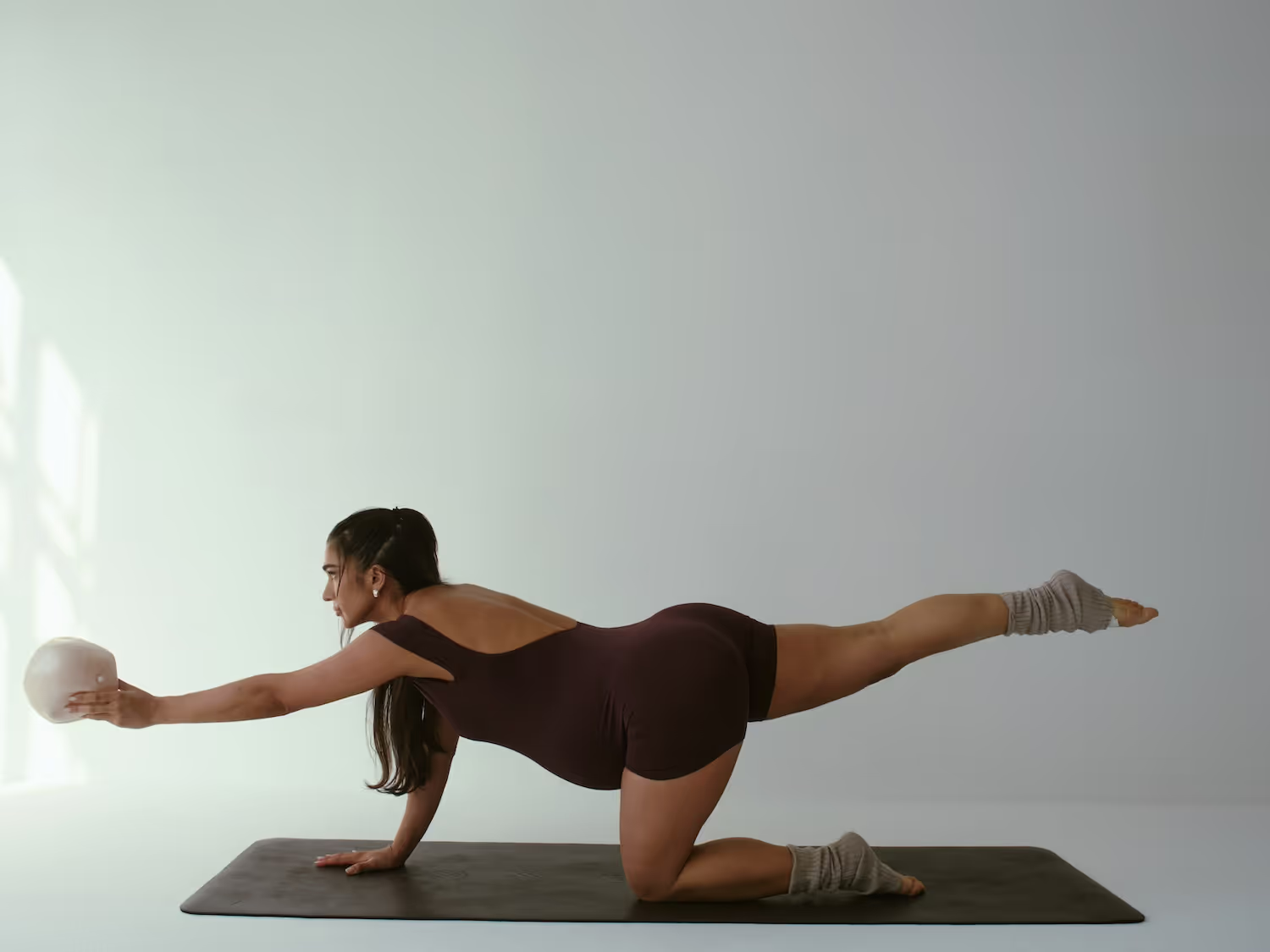
50% discount on annual
Claim 50% off your yearly WEGLOW subscription
Unlock access to WEGLOW for 50% off when you buy an annual plan, very limited offer so hurry
get the dealLimited time offer · Terms apply