
Ab Workouts For Women
Unlock More Content In Our App For Free
Join thousands of women transforming their fitness journey with personalised workouts, expert trainers, and a community that lifts you up.
Start free trial
Best Ab Exercises That Build Core Control
A well built ab workout gives you more than a shake and a burn, it trains your abdominal muscles to brace, protect the spine, and transfer force between your upper body and hips. We get the best results when our ab exercise choices match how we move in real life, then we pair that with consistent full body training and habits that lower your body fat, because spot training alone does not erase belly fat.
• Our best ab exercises for women prioritise control, breathing, and steady progression.
• We mix anti extension, anti rotation, and a carefully coached crunch pattern for complete core development.
• Core control supports posture, balance and stability, and confidence in compound exercises.
• A mat and bodyweight options make progress possible on busy weeks, and a dumbbell adds load when you want more challenge.
• We keep the plan flexible, so your fitness routine stays consistent across the month.
Ab Muscles And The Core System We Train
Most people use ab as shorthand for the front of the torso, yet the ab muscles are only one part of the core. The abdominal group includes the rectus abdominis, the deeper transverse abdominis, and the internal and external obliques. The lower back and glutes support that system, helping keep the spine steady as we walk, carry bags, and train.
Core training works best when we treat it like any other muscle group: we practise technique first, then add time, range, or load over weeks. We pick exercises that target the trunk from multiple angles, so no single pattern does all the work. ACSM has also pushed back on myths around core work and reminds us that quality matters more than gimmicks.
Ab Workout Rules That Keep You Safe And Getting Results
We use four simple rules to build core capacity without beating up your back.
We treat this as a short core workout: a handful of core exercises, done well, a few times per week. This abdominal workout starts with breath and bracing, then builds intensity.
Take a deep breath, exhale slowly, then engage your core before the first rep. Next, brace your core before the first rep, and we also use this cue when we want to strengthen your core for lifting and daily life. The cue we like is, brace as if someone is about to poke you in the stomach. Keep your core braced while you move, and let the breath stay calm.
Control wins. Fast reps feel harder, yet slow and controlled reps teach better bracing.
Progress in small steps. Add five seconds to a hold, add two reps, or add a little load.
Pair ab work with heavy basics. Your core as you lift is where the magic shows up.
A personal trainer can help you tidy form fast, yet clear cues and a camera can also help when you train alone.
Plank Work That Builds Endurance And Control
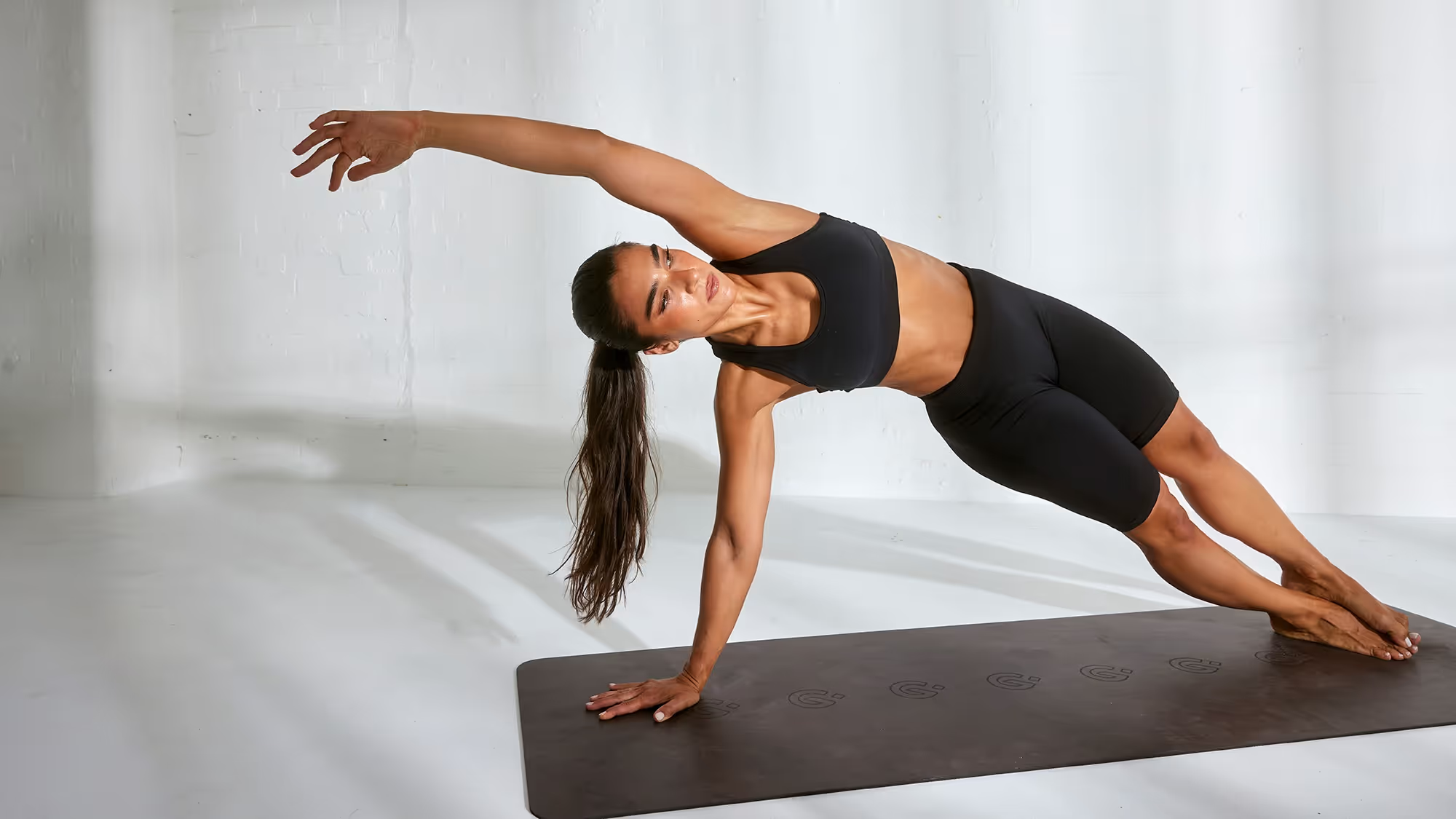
The plank teaches full body tension when form is right. Start with forearms on the mat, elbow under shoulder, legs straight, then squeeze glutes lightly. Aim to form a straight line from head to heels, and keep the ribs stacked over the pelvis. Press the elbow firmly into the mat and feel the shoulders widen. ACE Fitness also points out that endless static holding is not always the best use of time, so we prefer crisp sets with progressions.
Starting position cues:
• Place your hands on the floor for a high plank, keep arm straight, wrists under shoulders.
• Keep back straight, and avoid letting the hips sink.
• Hold 20 to 40 seconds, rest, then repeat. These sets build strength without letting form drift.
Crunch Technique That Respects The Spine
Crunch can be a best exercise for building front line endurance when we keep it tidy. ACE reported that the traditional crunch can create high rectus abdominis activation compared with several popular options.
Set up:
• Lie on your back with your knees bent and feet flat on the floor.
• Keep your lower back heavy, then lift the shoulder blades a few centimetres.
• Pause, then slowly lower to the starting position.
One extra cue helps: start back with your knees bent, and keep the range small so the neck stays relaxed.
Bicycle crunches fit well as a rotation option: extend the right leg, bring the opposite elbow toward the knee, and keep the other leg straight out in front. Move the opposite arm and leg with control, and keep legs and arms coordinated, then switch sides, keeping your legs long.
Dead Bug Practice For Deep Core Muscles
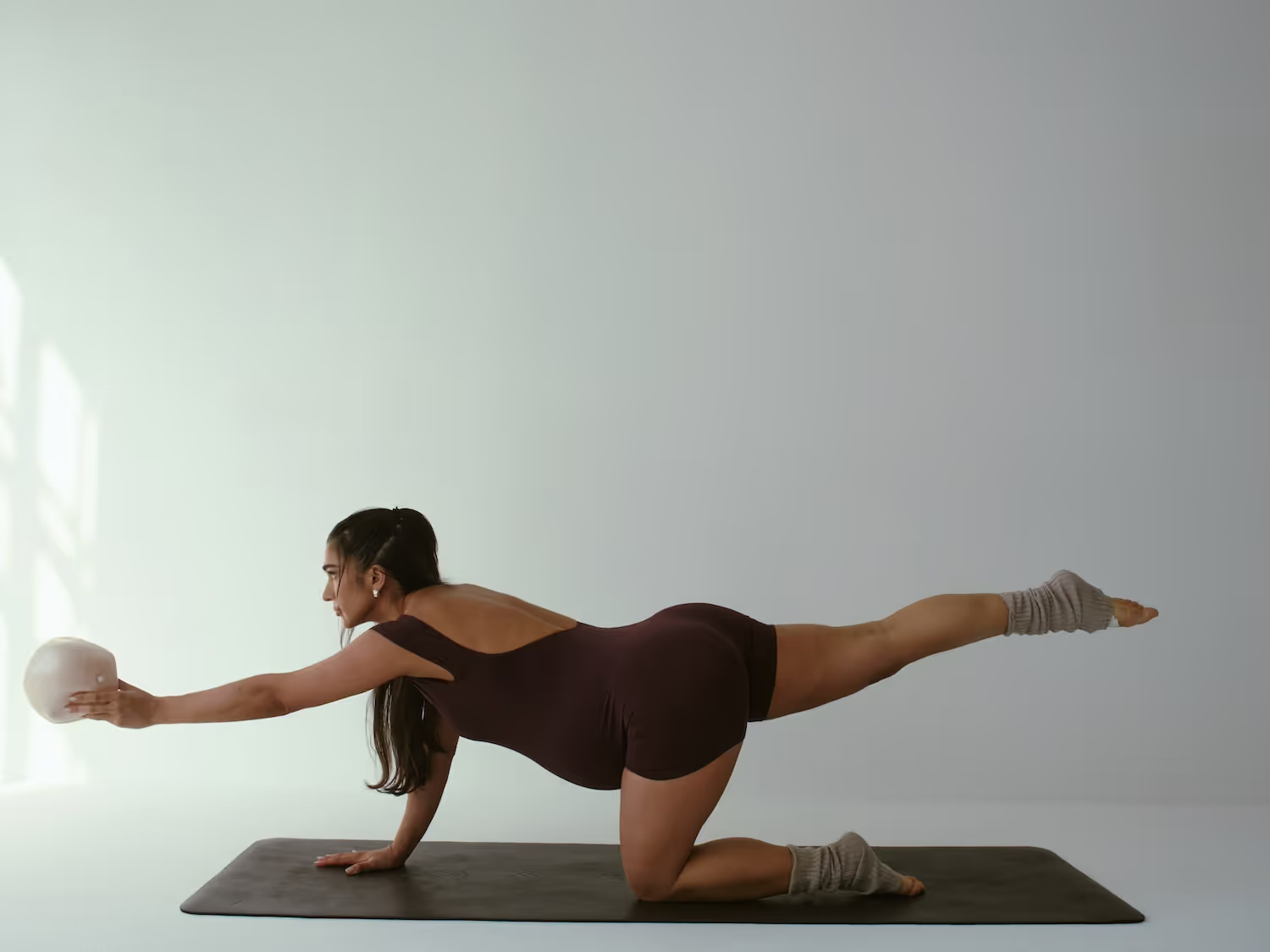
This drill teaches the core and back muscles to stabilise while the limbs move. Harvard Health describes how you lie on your back on a flat surface and use controlled limb movement while you keep the trunk steady.
Coaching points:
• Keep the ribs down and the pelvis level.
• Stop the set before the lower back lifts off the mat.
Mountain Climbers That Challenge Bracing Under Fatigue
This move starts in a high plank, then one knee drives forward while the other leg back extends. Keep shoulders over wrists, keep the trunk steady, and avoid bouncing through the hips. Short bursts work well as a finisher because they work the core while also raising your heart rate.
Russian Twists With Better Rotation Control
Rotation work is useful for the obliques, yet we want control rather than a sloppy swing. Sit tall with knees bent, feet flat on the ground, and lean back slightly while staying long through the spine. Hold a dumbbell close to the chest and twist your torso side to side in a small range.
Lower Core Work With Pelvic Control
Lower core work often turns into hip flexor dominance when the pelvis tips forward. We aim for core and lower control, not a hip flexor takeover. Our best lower ab exercises keep the ribs down and the pelvis stable.
Heel tap pattern:
• Start flat on the floor, knees bent, then lift your legs so shins are parallel to the ground.
• Tap one heel down, then switch.
• Keep the movement small, and keep tension through the front wall.
Leg raise pattern:
• Keep legs straight, point your toes, then raise your legs to a height you can control.
• Use the hands on the floor for support if needed, and keep the rib cage down.
Standing Ab Exercises And Loaded Carries
Standing work teaches bracing in positions that feel more like daily life. A suitcase march is our favourite: hold one dumbbell at your side, walk in place, and do not lean. This is where weighted ab exercises can shine, because load asks the trunk to resist side bending without needing high reps.
Body Fat And The Role Of Ab Training
Mayo Clinic explains that belly focused work can tone abdominal muscles, yet doing those exercises alone will not get rid of belly fat. Harvard Health also notes that spot exercises can tighten the midsection, yet visceral fat responds best to an overall approach that includes activity and strength training.
We keep it simple: ab training improves control and strength, and habits that reduce your body fat shift the look. Food quality, sleep, and daily movement matter just as much as your ab workout.
Quick Ab Workout At Home Using Five Exercises
This short circuit takes 10 to 15 minutes and fits around any schedule. Work for 60 seconds per move, rest 15 to 20 seconds, then repeat once.
- Plank hold
- Crunch
- Heel taps
- Suitcase march with a dumbbell
- Controlled leg raises
This is one of our best ab workouts for women, and it also suits beginners because you can bend your knees to reduce load, or shorten the time.
Pelvic Health Considerations And Lumbar Comfort
Pelvic floor work and core training support each other, especially after pregnancy. The NHS provides post pregnancy guidance that includes gentle stomach work alongside pelvic floor activation, with reminders to breathe normally. NHS England is also expanding perinatal pelvic health services to improve prevention and access to support.
Core stability exercise research suggests a positive role for stabilisation work in persistent non specific lumbar pain. Core stability work can also support people who deal with back pain, especially when form stays strict and loads progress gradually. One warning matters: pain that worsens, heaviness, or leaking deserves professional advice.
WeGLOW Support That Keeps Your Ab Routine Consistent
WeGLOW is built for real life, not perfection. Training your core is easier when the plan fits your schedule and energy. We offer over 2,500 workouts across strength, Pilates, cardio, yoga, mobility, stretching, meditation, and breathwork, and we add new sessions every week so training stays fresh. We also recommend workouts that match menstrual cycle phases, helping you train with your body rather than against it.
Our quick filters, weekly planner, and tracking tools make it easier to pick the right session for the day, log progress, and keep motivation high.
App Experience That Avoids Common Frustrations
Women often tell us the same complaints about other platforms: auto renewal surprises, refund confusion, bugs, progress not saving, rigid programme flow, and repetitive content. We take those concerns seriously, so we focus on clear subscription messaging, steady performance, flexible training choices, and enough variety to keep your ab workout engaging for the long term.
Ab Training Takeaway
Our best ab exercises combine plank based bracing, a clean crunch, controlled rotation, and smart lower core work, then we add load with a dumbbell when you are ready. Keep sessions short, practise bracing, and build core strength step by step, and your ab training will support posture and performance across everything else you do. A strong core also makes daily carrying and gym work feel steadier.
AuthorAnna Hage
FAQ's
Is WEGLOW a good fitness app for women and what makes it different?
WEGLOW offers varied training styles (Strength, Pilates, cardio, yoga, barre, meditation and more), weekly new content, and built-in tracking (PBs, badges, stats, progress photos). Most importantly, 98% of women that use our fitness app and stick to their plan see results in 8 weeks1
How accurate are the calorie and nutrition tracking features?
They can be helpful for awareness, but accuracy depends on how precisely you log your meals in the WEGLOW app.
Is WEGLOW the best women’s fitness app for personalized workout plans?
Yes, we think so, It offers goal-based programs, from strength training and yoga to pre or post-pregnancy fitness. The app tailors workouts to your fitness level, tracks progress, and includes nutrition guidance, making it a top choice for women seeking a complete fitness solution.
How do I set calories for muscle gain or fat loss when I plan my week?
Pair training with a simple calorie target: for muscle gain, add a small surplus (about +125 to +500 kcal/day depending on the weekly rate you want) and keep protein around 1.6–2.2g/kg. For fat loss, create a modest deficit (about −250 to −1,000 kcal/day depending on the weekly rate you want) while prioritising lean protein, veggies and whole-grains. Then plan ahead—batch cook, build a varied menu, and keep flexible so life can still happen.
What workouts should I do during my period?
We recommend keeping it kind: think lower-intensity or lower-impact movement like Pilates, yoga, walking or light cardio. If you’re strength training, go lighter with slightly higher reps, focus on breathwork, hydrate well and listen to how you feel—rest is ok. Some women also find magnesium, zinc and omega-3 helpful for symptoms; always check what’s right for you and track how you respond across your cycle.


Related
Workouts
Workouts and fitness routines with our trainers to improve your health


50% discount on annual
Claim 50% off your yearly WEGLOW subscription
Unlock access to WEGLOW for 50% off when you buy an annual plan, very limited offer so hurry
get the dealLimited time offer · Terms apply